At Transcend Institute in Padi, Chennai, technicians and engineers use virtual reality (VR) to prepare for oil refinery maintenance and shutdown jobs. Step inside the refinery simulation, locate the equipment on your job drawing and explain your next move. An instructor can guide you through the task, or an employer can use the same scene to assess how you work independently.
Transcend Institute’s own team designed and built every oil and gas VR module in-house in India. We also built our dedicated Chennai facility for training and testing. A pipe fitter can follow a line in the virtual plant, read the isometric drawing and then use tools in our workshop to show how the joint should fit.
VR training in action
Explore the refinery walkthrough, piping exercises, heat exchanger activities and welding simulation used in role-focused training and assessment.
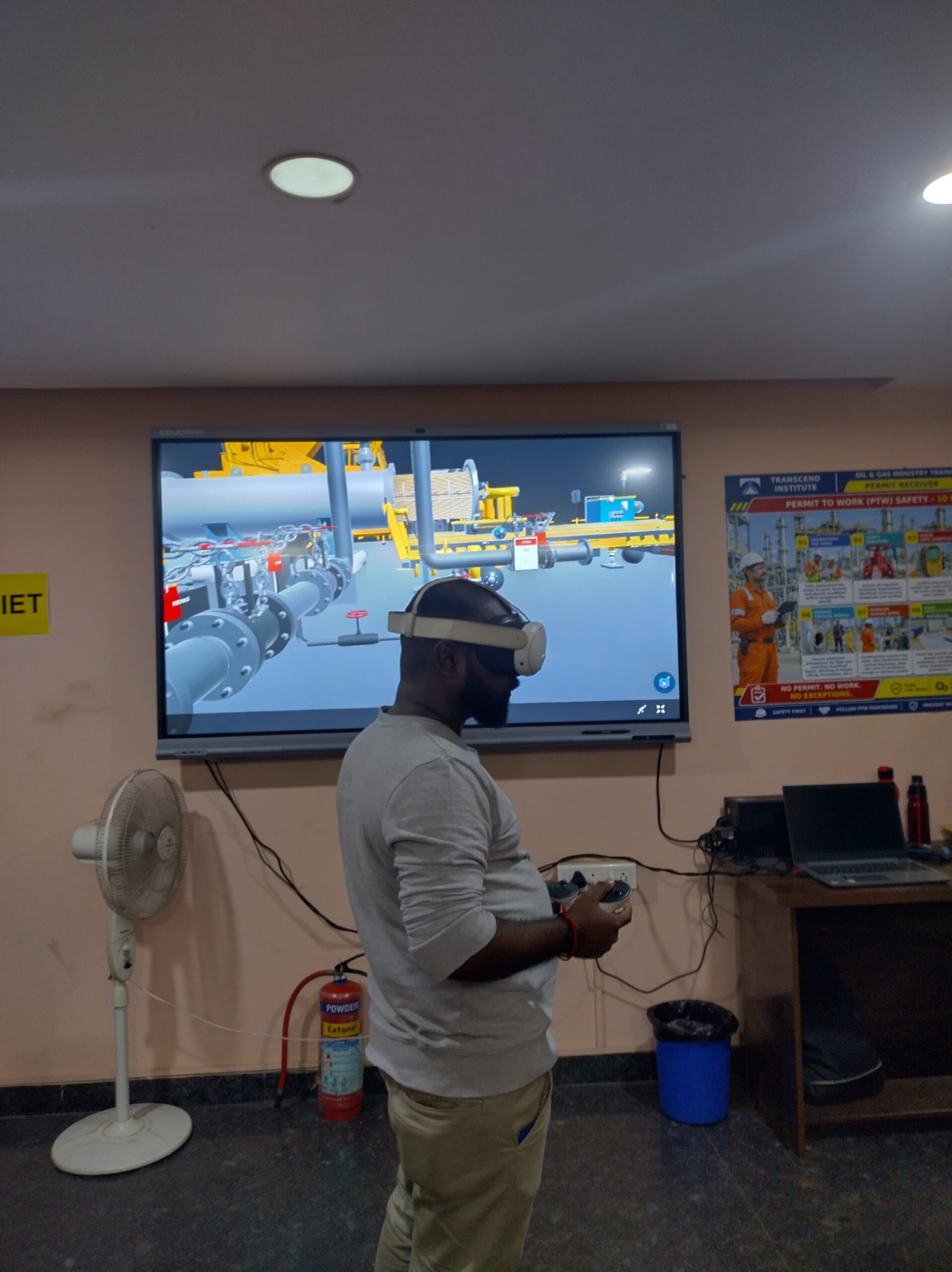
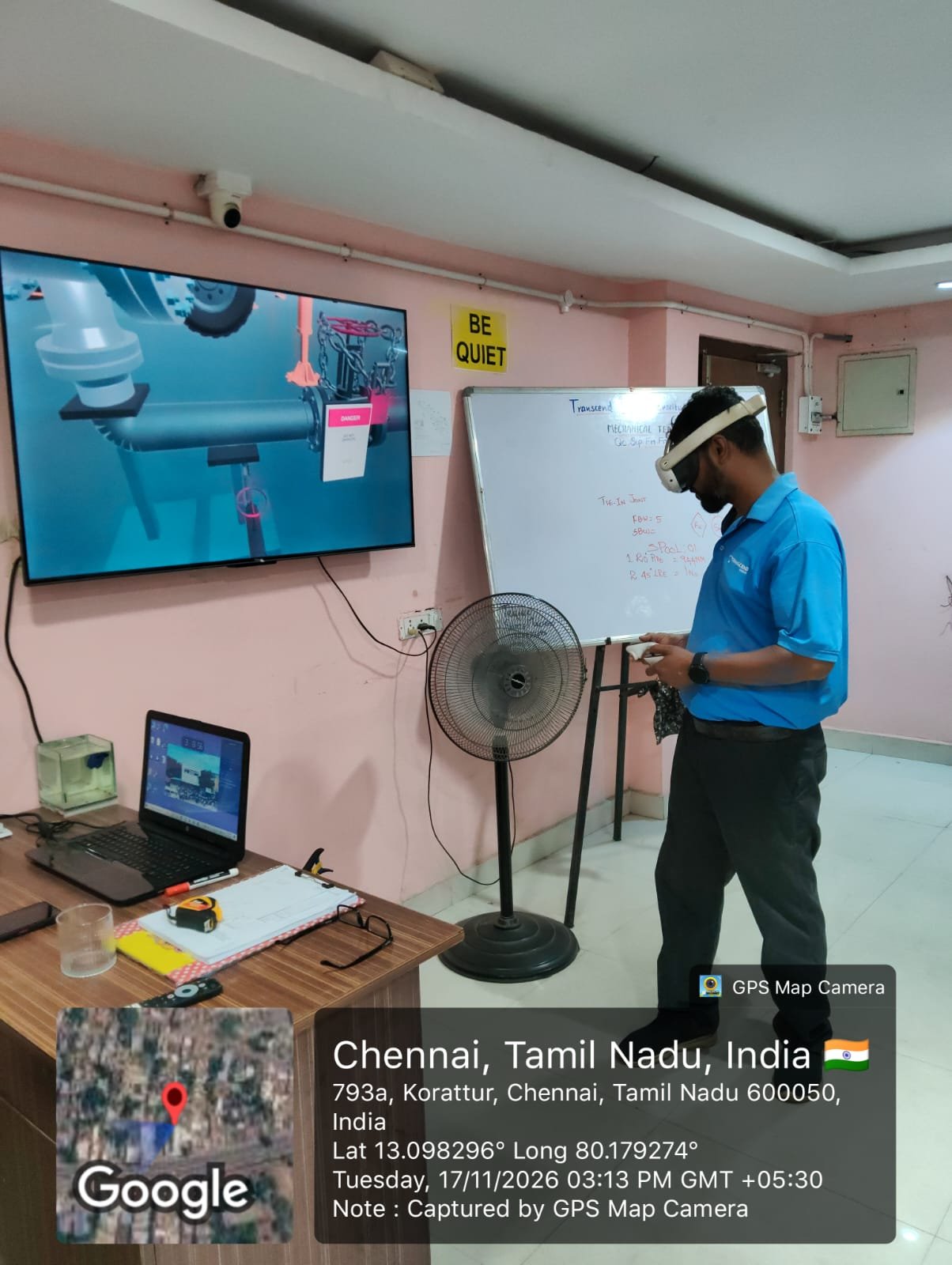
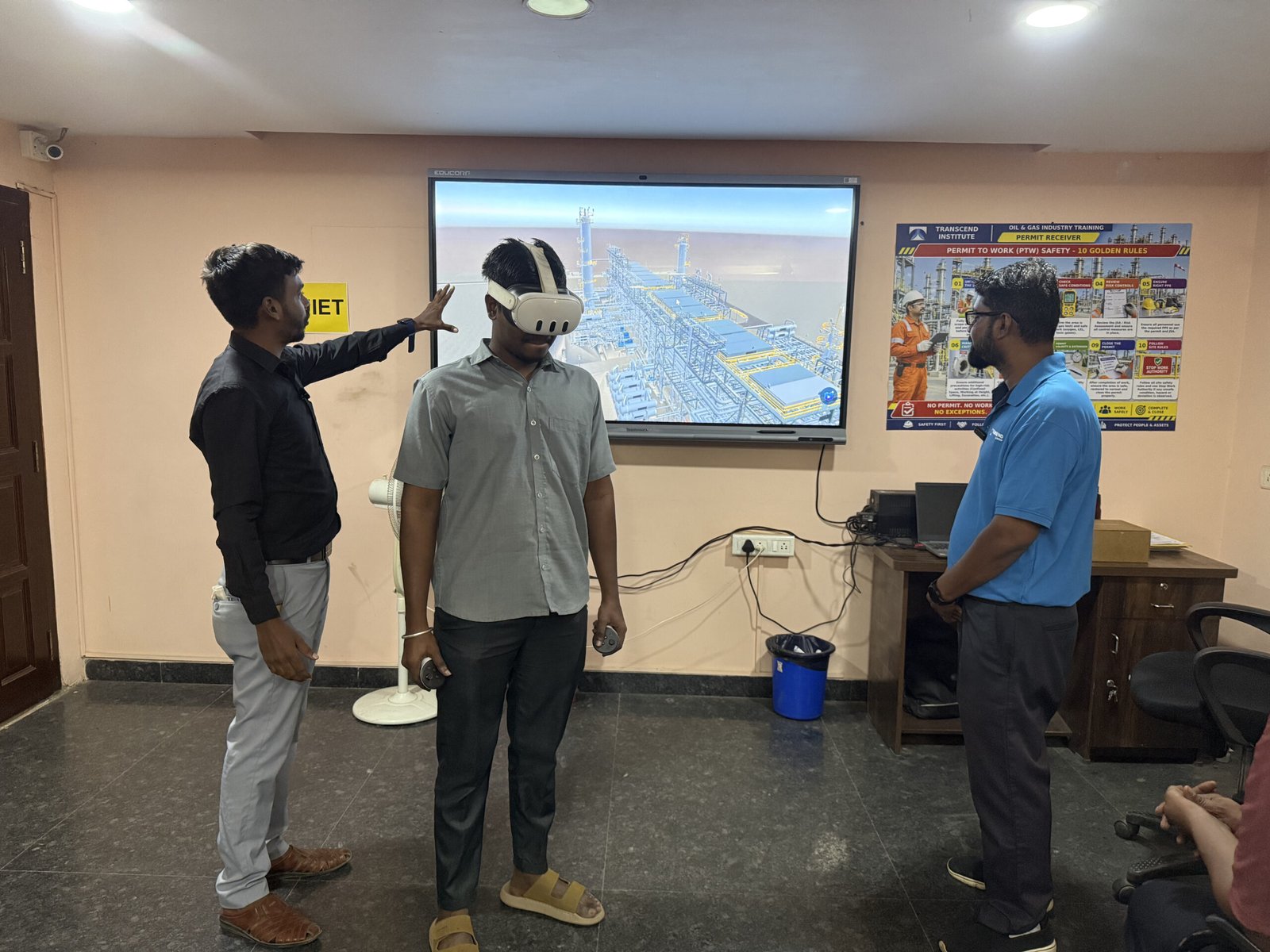
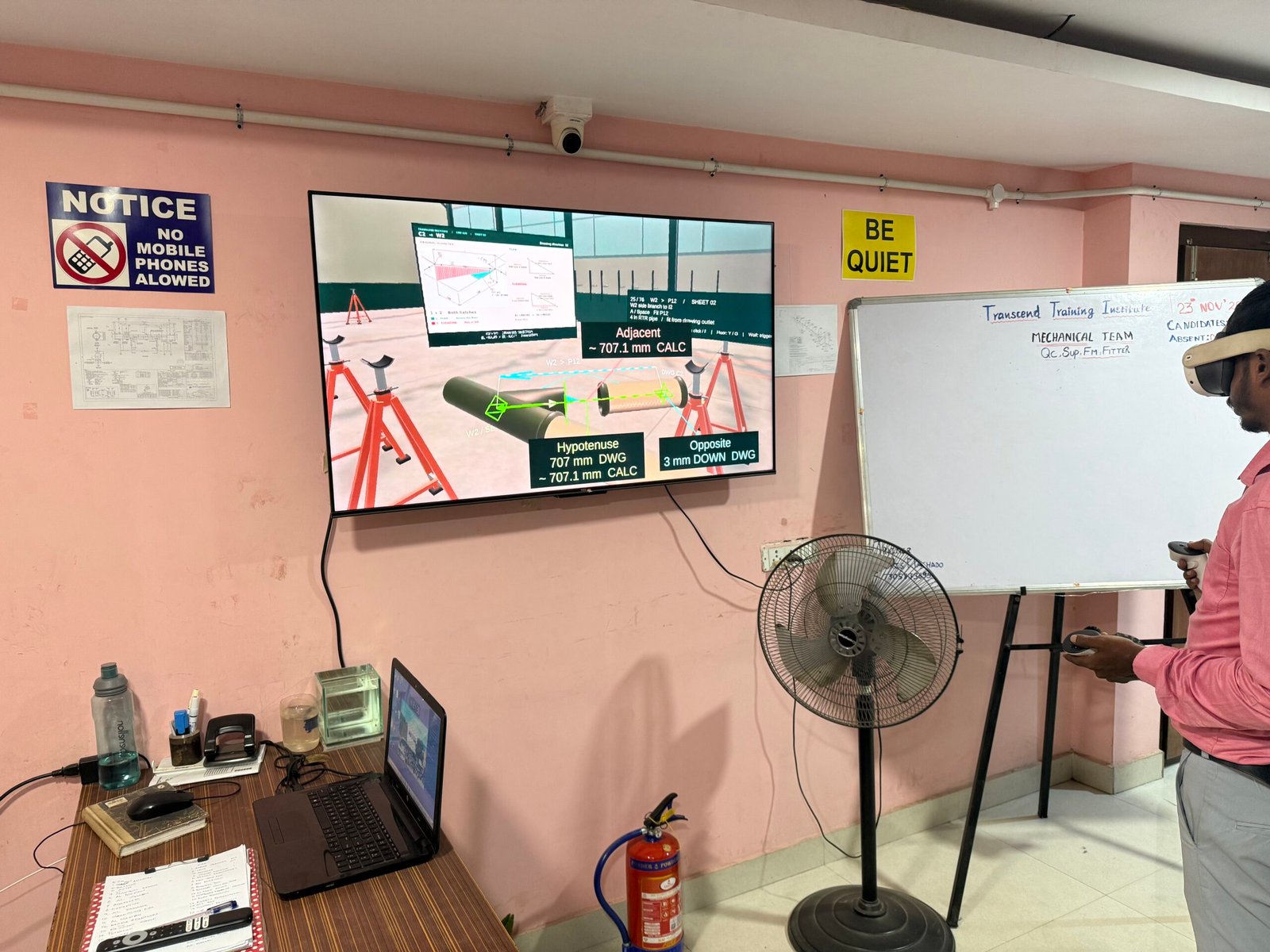
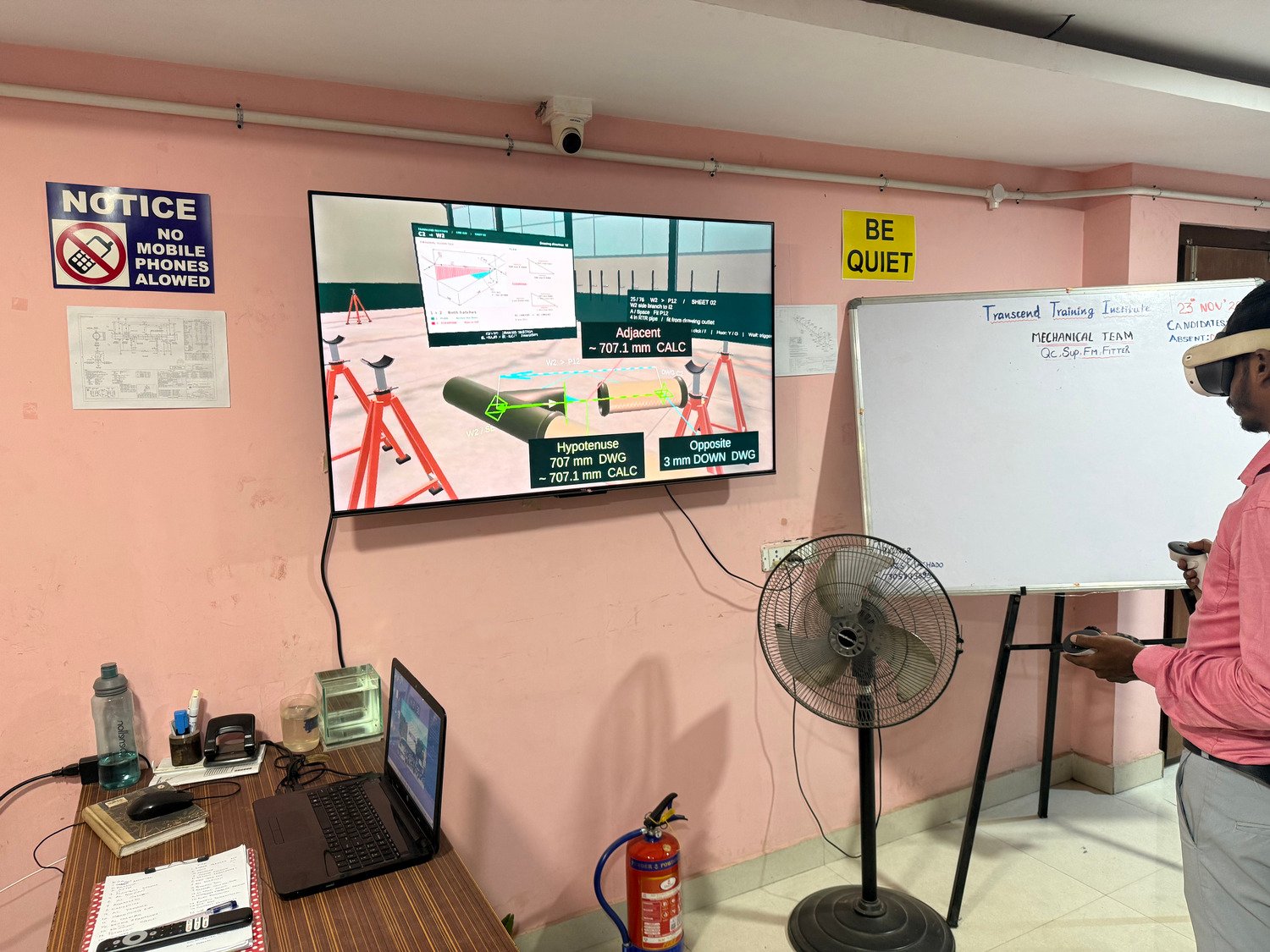
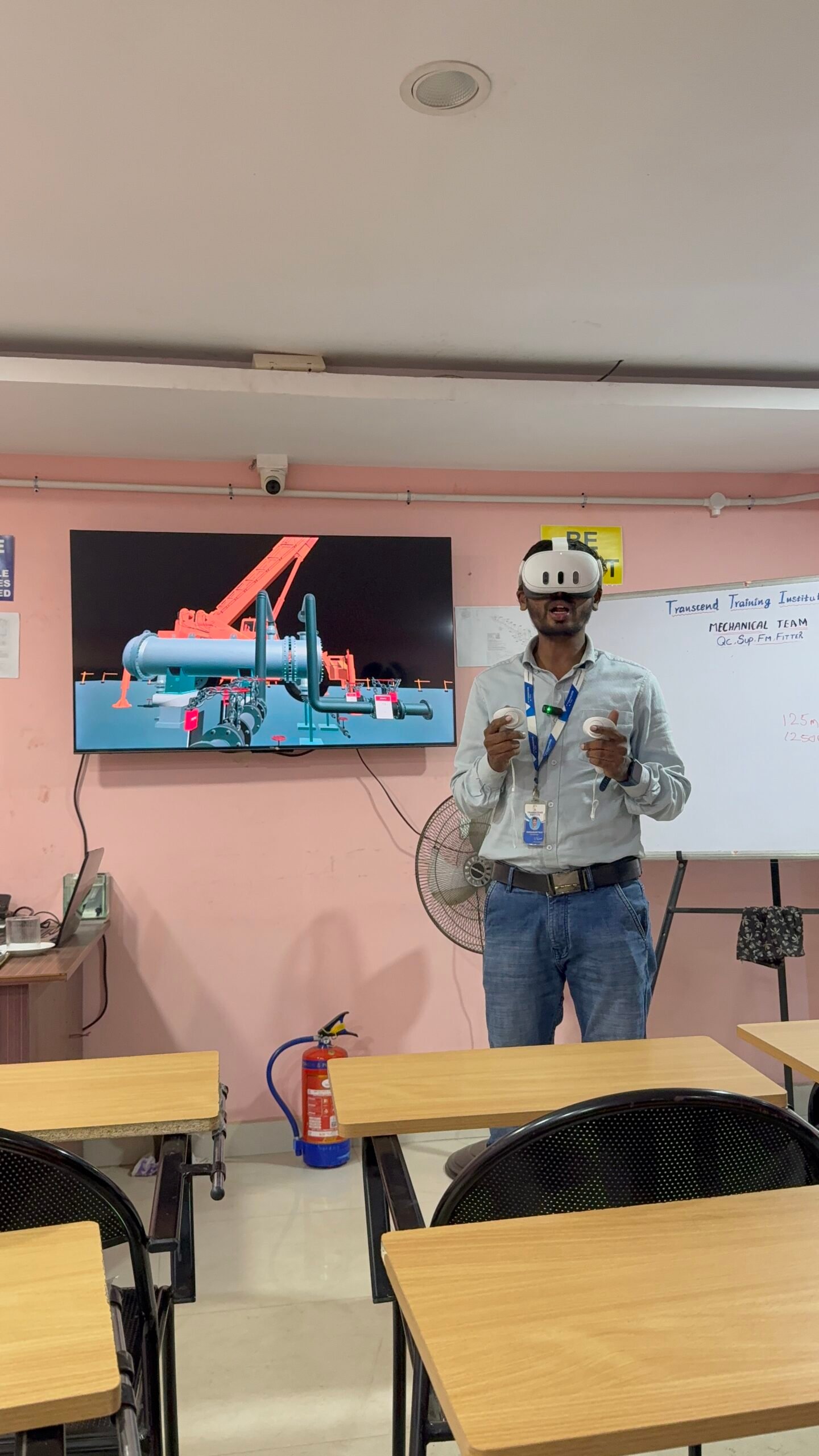
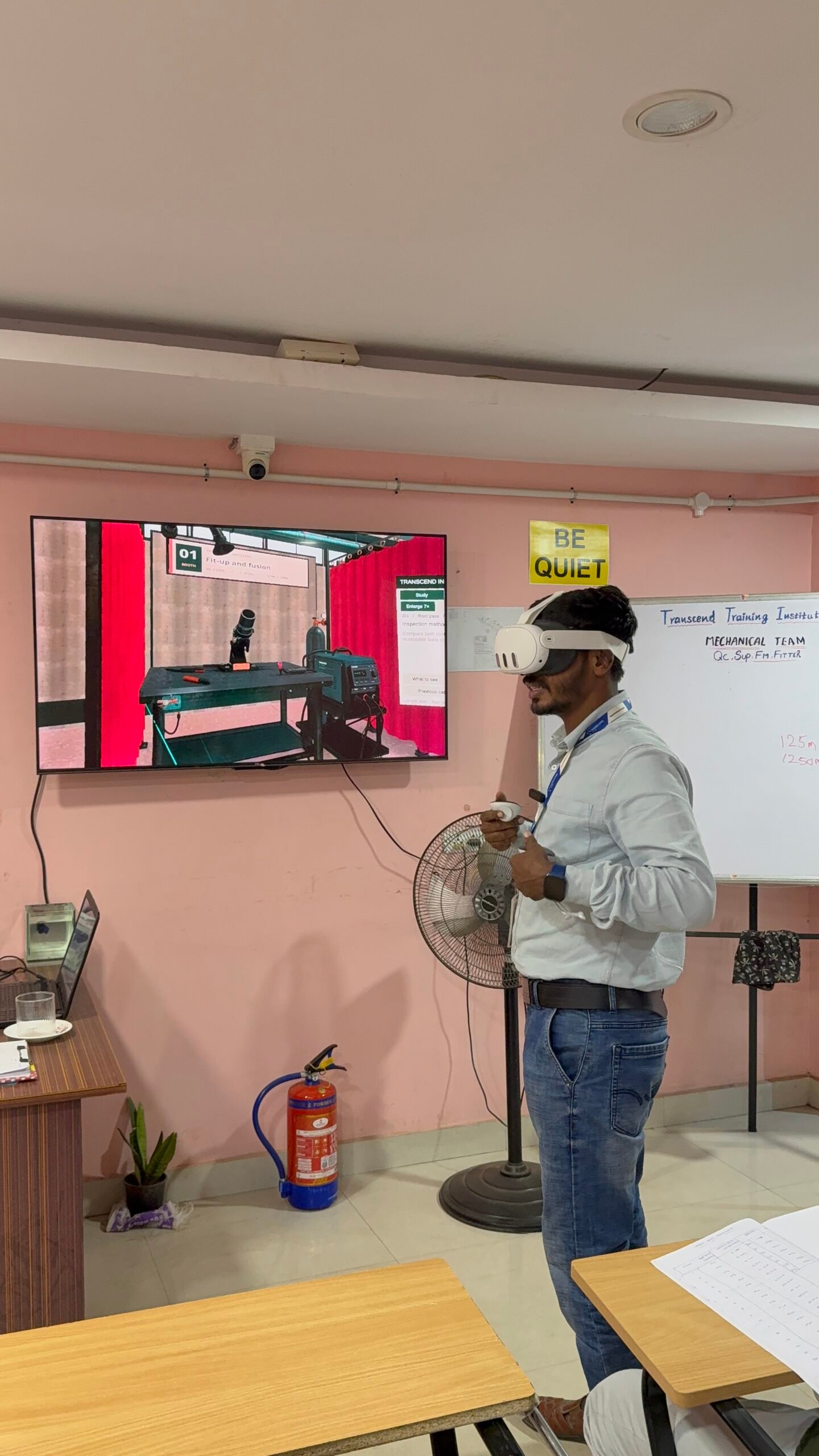
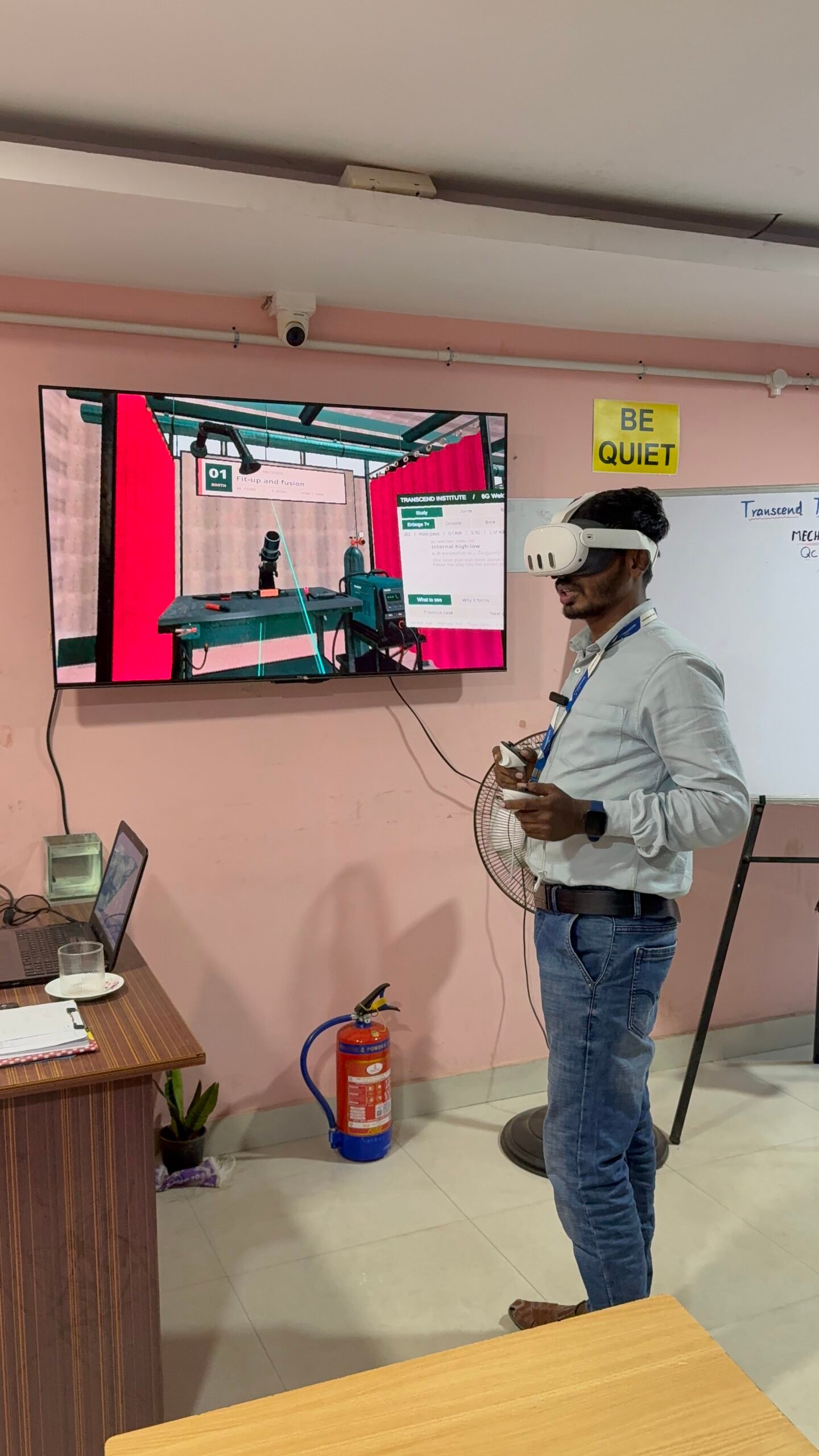
Inside the oil refinery VR simulation
The walkthrough covers the crude distillation unit (CDU) and vacuum distillation unit (VDU). Follow pipework between columns, vessels, pumps and heat exchangers. Look for the valves and flanged connections along a line, then inspect the platforms and access routes around the equipment. A drawing tells you what connects to what. The walkthrough helps you see whether a crew can reach the connection and what other work might share that space.
Consider a heat exchanger due for maintenance. A mechanical technician identifies the channel cover. A bundle puller operator studies the clearance in front of the exchanger. A planning engineer explains when the inspection crew can take over and which activity must wait for its release. One piece of equipment gives an assessor three different ways to test job knowledge.
Watch Transcend Institute’s 360° oil and gas VR training video.
VR training for oil and gas jobs
If you are preparing for an oil and gas interview or shutdown trade test, start with the work you will be asked to do. For a pipe fitter, that could mean finding the correct orientation of a rolled elbow. For a permit receiver, it could mean spotting that the work described on a permit differs from the job at the workface.
Each assessment starts with the role. These examples show the kinds of questions an assessor can explore in VR, in a technical interview or at a practical trade-test station.
| Job role | Example assessment task |
|---|---|
| Fire watcher | Inspect a hot-work area, point out where sparks could travel and explain when to raise the alarm. |
| Hole watcher, manhole watcher or standby man | Account for entrants from the attendant’s position and explain how to respond if communication with someone inside is lost. |
| Permit receiver, HSE officer or safety officer | A permit receiver compares the work location and scope with the permit. A safety officer identifies conflicting work nearby and explains which controls need review. |
| Fitter, mechanical fitter, mechanical technician or oil and gas technician | Identify the equipment and flange joint in scope, select the tools for the task and explain the checks needed before handover. |
| Pipe fitter or pipe fabricator | Read an isometric drawing, establish the pipe centreline with the appropriate tools and show how to check a rolled elbow and flange orientation against the drawing. |
| Rigger or bundle puller operator | A rigger identifies the load path and exclusion zone. A bundle puller operator examines the exchanger layout and explains the clearance the extraction crew needs. |
| Welding inspector or QA/QC engineer | Examine a simulated 6G pipe weld, locate a visible indication such as undercut, record its position and identify the acceptance criteria to consult. |
| Mechanical, piping or maintenance engineer | Compare a drawing with the work area, identify an access or fit-up constraint and explain what the crew must resolve before proceeding. |
| Planning engineer or shutdown planner | Sequence an exchanger maintenance job, identify which activities depend on inspection release and explain how a delay affects the crews that follow. |
Refinery safety and shutdown maintenance training
Alongside hot work, confined-space watch and permit-to-work scenarios, training covers personal protective equipment (PPE), hazardous energy isolation and lockout/tagout (LOTO), electrical safety and arc flash. Other topics include work at height, scaffolding, load slinging, excavation and trenching, and maintenance on chemical or acid lines.
For teams whose work extends beyond the process unit, ask about vehicle pre-start checks, road incidents involving dangerous goods and underground roof-fall hazard awareness.
How employers can assess technicians and engineers
For a recruitment drive or pre-mobilisation assessment, send the job description, trades, headcount and project dates. We can agree on a common scenario for candidates applying for the same role. For example, ask every pipe fitter to locate the same spool on a drawing, identify the tools and demonstrate the alignment check. Your technical team can see who completed each part independently and where additional training would help.
- Agree on the job. Tell us your trade or share the employer’s job description. We identify the relevant tasks, the available modules and any workshop test the role calls for.
- Practise with an instructor. During training, you can revisit the work area, try a task again and discuss the point where you got stuck.
- Demonstrate your skills. During assessment, the assessor gives you a job brief and observes what you identify, what you check and how you explain your decisions. A workshop test can then examine the physical skill, such as measuring a spool or checking flange alignment.
- Review the result. Discuss what you demonstrated independently, where you needed prompting and which skills need further practice or an on-site check.
Questions about courses, trade tests and vacancies
Which course should I choose for my trade?
Choose the role you expect to perform. For hot work or piping, explore our fire watcher training and oil and gas pipe fitter course. For inspection or scheduling, see welding inspector training for shutdown maintenance or Primavera training for planning engineers.
Can an employer combine VR with a practical trade test?
Yes. A virtual refinery task can assess equipment recognition, job sequence and judgement. A workshop test lets your assessor observe a physical skill such as measuring a spool or checking flange alignment. Share the tasks you need to assess when requesting a demonstration.
What are the fees, duration and entry requirements?
Tell the admissions team your target role, experience and preferred dates. Ask them to confirm the available modules, workshop component, eligibility, course duration and fee for that session before booking.
Where can I apply for oil and gas jobs?
Use the Institute’s application form for training. If you are looking for oil and gas vacancies or want to submit your CV, visit Transcend HR Consultancy’s recruitment website. Vacancy availability and selection depend on the employer.
Arrange training or an employer assessment in Chennai
For candidates. Tell us your trade, experience and the role you are preparing for. Our team will advise you on the relevant session, schedule and fees. Apply for VR training.
For employers and contractors. If you are recruiting for a shutdown, preparing a maintenance crew for mobilisation or planning refresher training, send us the job titles, candidate numbers, project scope and target dates. We can demonstrate a relevant scenario and agree with your technical team on what each candidate should demonstrate. Discuss a workforce assessment.
Transcend Institute783, M.T.H. Road, opposite Britannia Company, Padi, Chennai 600050, Tamil Nadu, India
Call or WhatsApp +91 96777 99280 or +91 80900 07070
Email hari@transcendhrc.com